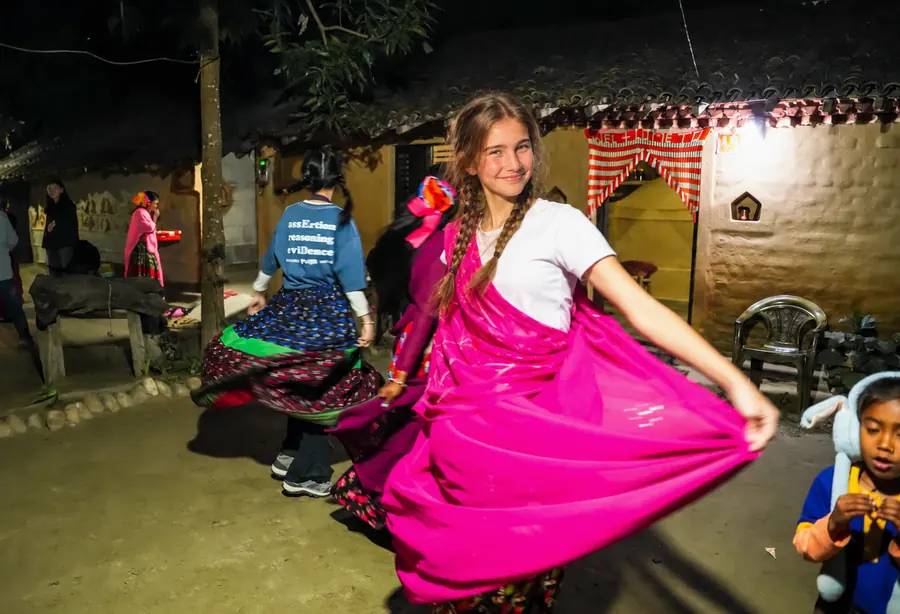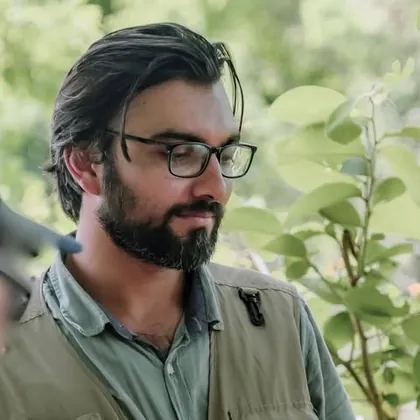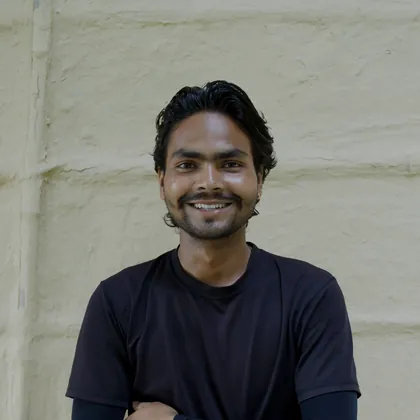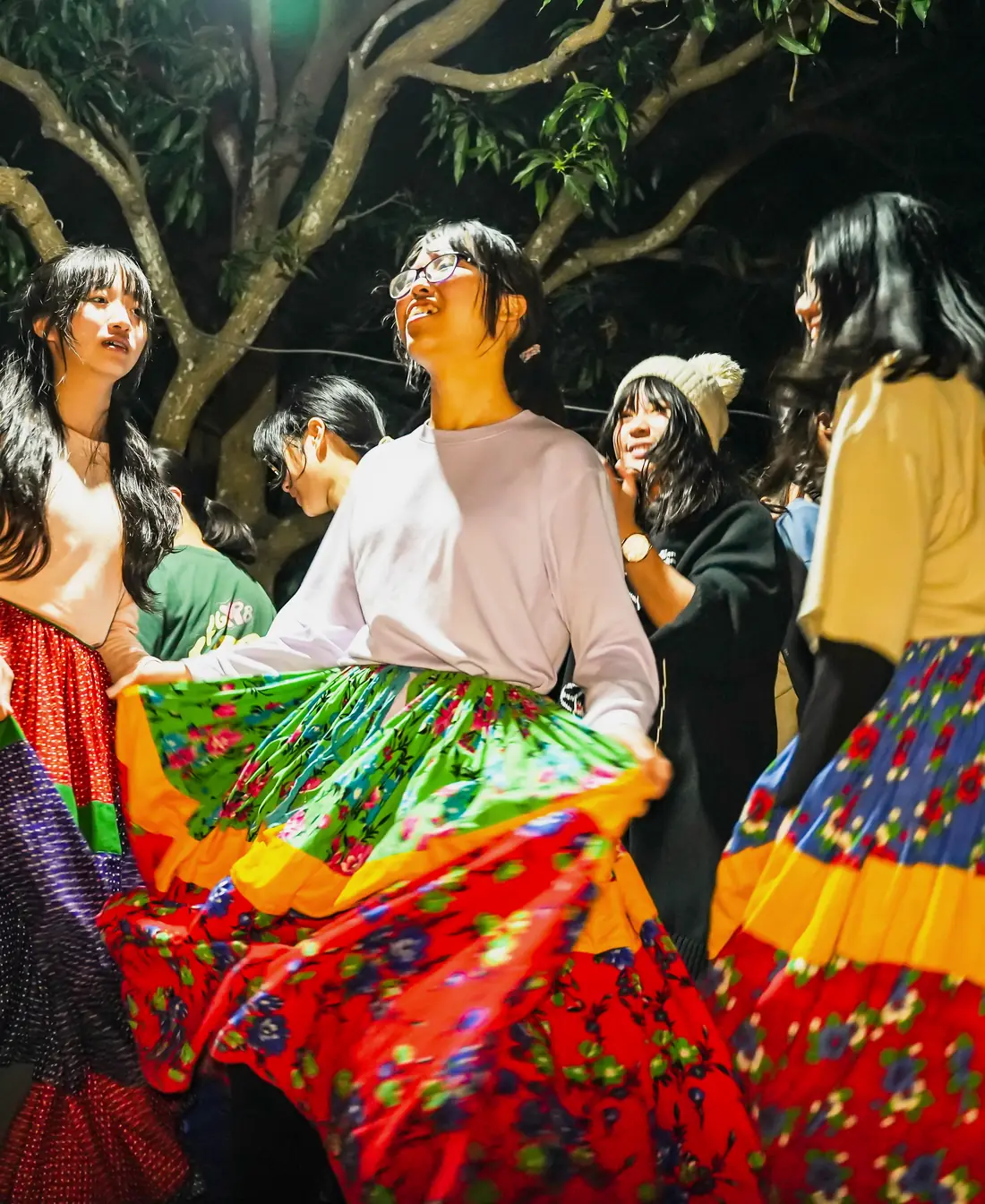



Students dancing together in Tharu skirts by lamplight under a mango tree

Learn.
Regenerate.
Belong.

Himalaya Living School places young people where the questions are real, from the tiger forests of Bardiya to the cloud forests of Nagarkot. Where learning meets the ground.

4 grounds across Nepal 7 programmes 20+ years in the field Bardiya · Nagarkot · Deumadi · Mobile Camp

Our invitation

Please, lend us your young people.

We need their fresh eyes, their curiosity, and the questions only someone from outside thinks to ask.

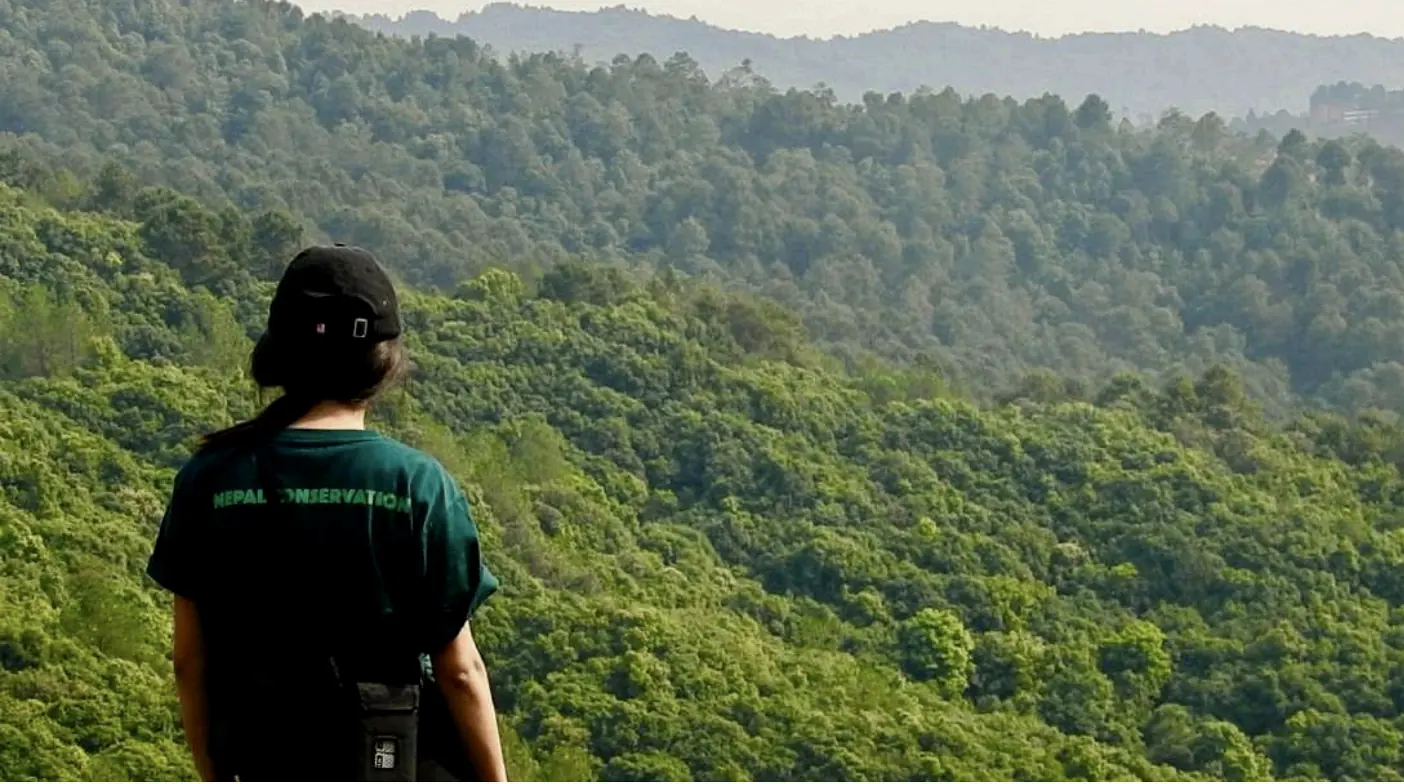
A student in a Nepal Conservation shirt looking out over forested ridges

Within 100 miles, Nepal rises from lush lowland jungle where tigers hunt, through the red panda's hilly terrain, higher still through the snow leopard's cloud forest, and eventually to Everest and its endless, unlimited horizons.

At Himalaya Living School, we believe a young mind is just as unlimited, and there is nowhere better than Nepal to prove it. For over 20 years we have welcomed students from all walks of life, from schools across Nepal and around the world. Where learning meets the ground.

What they experience here stays with them. Some will go on to lead in ecology, conservation and community, having learned from the people who live the world's real dilemmas rather than from people who only study them.

That is how a field changes: one person at a time, towards a world where caring for nature is not the business of a profession, but simply part of how a society lives. That future belongs to them.

How we teach

Four things the ground teaches.

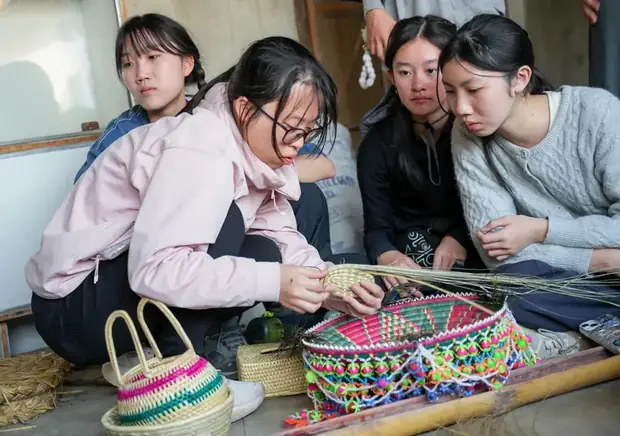
Students learning to weave a grass basket alongside village makers

Craft

Some knowledge lives in a body, not a book. Here, the people who hold it teach.

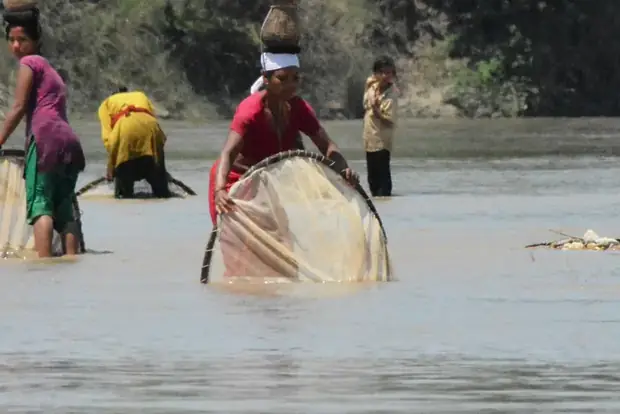
Tharu women fishing the Karnali with conical nets, baskets balanced on their heads

River

Everything downstream depends on what happens upstream. So does everything you do here.

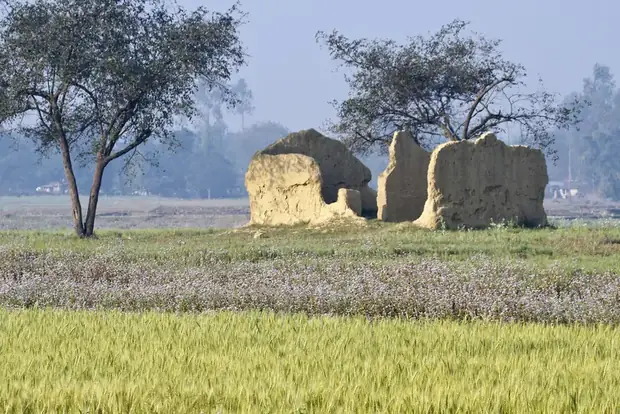
A ruined adobe house standing in flowering fields near Bardiya

Home

The test of what you build is whether it is still standing after you have gone.

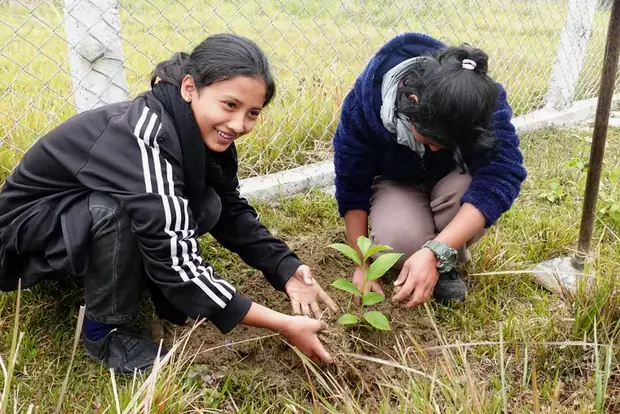
Two students kneeling to firm the soil around a newly planted tree seedling

Harvest

Take what you need. Leave what must grow back. That was the whole of it, before anyone was paid to name it.

We teach in the field, where learning meets the ground.

From the jungle up to the mountain peaks, we bring young people and educators into the dilemmas the community lives. Modern education assumes knowledge is formed in a protected space and applied to the world afterwards: curriculum first, consequence later (if at all). It produces people who are technically sophisticated and ethically thin. Fluent in applying existing frameworks, poorly equipped to question them.

Himalaya Living School restores consequence to the centre of learning. Not consequence meaning reward and punishment, but meaning a young person's choices have real effects on people, on animals, and on changing landscapes, with those effects returning as the lesson itself.

A classroom manages consequence out of the way; we build learning around it. Students might design a solution, present it to the local ward office, and see it through in partnership with Nepali students. The most rigorous learning environments aren't classrooms at all, but living communities navigating problems, where the cost of not learning is immediately apparent.
The community is our faculty.

Traditional knowledge is a system of practice, not folklore. A student learning to build with bamboo and mud isn't following a worksheet, she's apprenticed to a woman who has built these walls her whole life, whose grandmother built them before her, and whose judgement of 'good enough' comes from decades of watching what stands through a monsoon and what doesn't. That judgement can't be faked, and it can't be taught from a book.

My grandparents taught me forest signs. My teachers call those practices backward. But when NGOs want our stories for donors, suddenly our knowledge is valuable.Laxmi Tharu, 19

So the community does not only teach here. It holds the authority to assess students' work: does this address the real problem, or a more comfortable version of it? What has been ignored? Can we actually use it? The right to judge what succeeds sits with the people who will bear the results.

We learn through relationship. A student who has spent three days with a family stops studying an issue and starts caring about it, and that's the point at which learning changes character.

We ask before we answer.

We drop students straight into the problem: no map, no manual, no answer sheet. Give someone the answer before they have felt the question and it only confirms what they already believed. Let them arrive at it knee deep, and it changes how they see everything.

We are not trying to hand over answers. We are trying to help students build better questions, and find the confidence to ask them out loud.

A student chasing a grade is always half elsewhere: one eye on the task, one eye on the result. A student inside a problem is being changed by it while it happens. That is the only kind of learning that builds judgement; the ability to walk into a messy situation and know what actually matters. Facts tell you how. Judgement tells you when, for whom, and to what end.

We don't vanish.

What a student takes away is not a set of facts. It is a mark left on how they think, and it surfaces long after the visit. Not in a test at the end of the week, but in what they notice next time something difficult lands in front of them, what options they can imagine, how they weigh a decision. In the quality of their judgement, in some later situation that looks nothing like this one.

So we design for that, with continued structured contact, return visits, and alumni work. We also run a parallel virtual programme, tailored to a school's own curriculum. This can sometimes offer what a visit cannot, like the former poacher turned police informant who will speak to students over video, an encounter that could never happen in person.

Why we teach this way →

What we teach

Seven programmes, each adapts to the landscape.

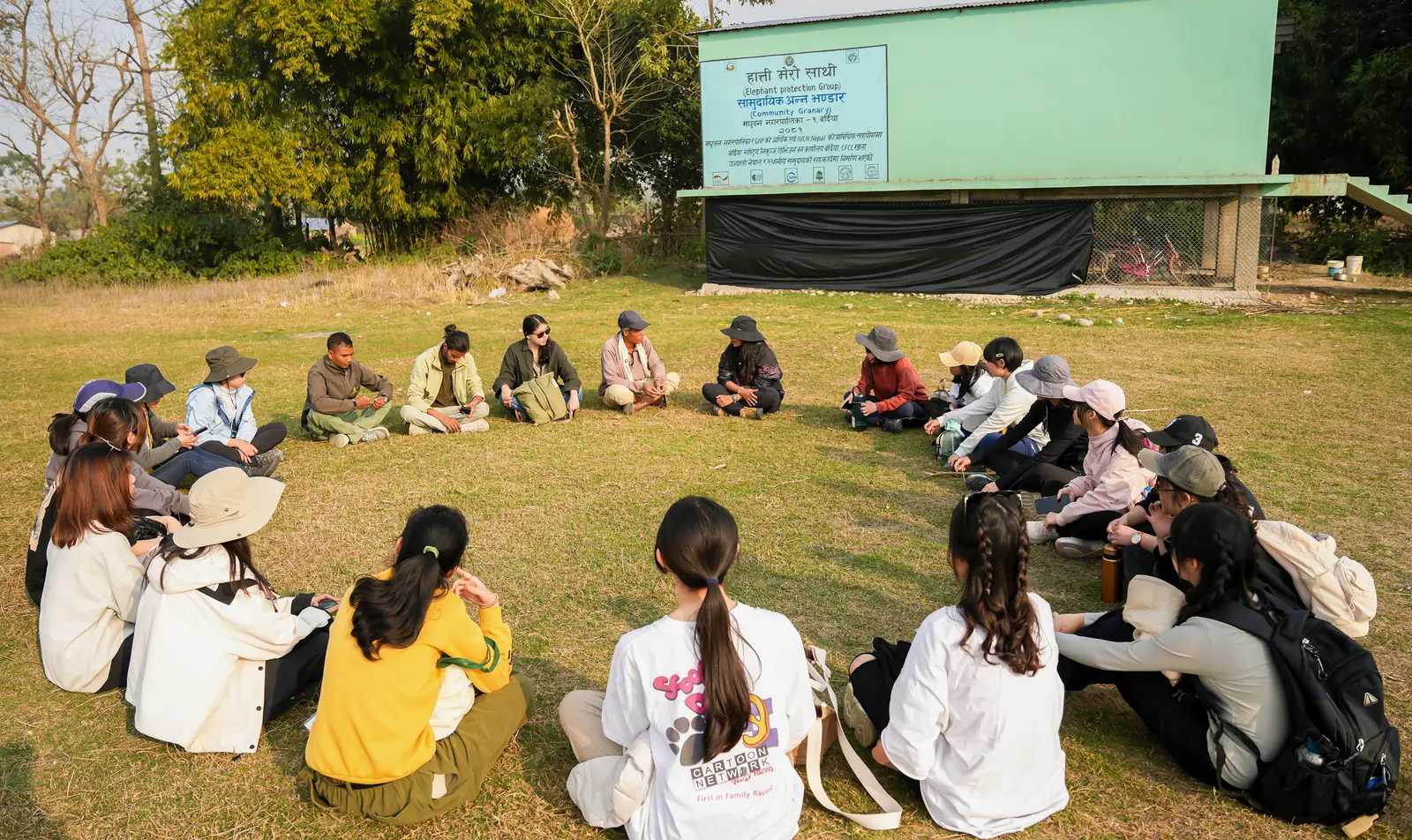
Students and community members sitting in a circle on the grass in front of the Elephant Protection Group community granary and its projection screen in Bardiya
A circle at the Elephant Protection Group’s community granary, Bardiya — students and the people whose landscape it is, on the same ground, at the same height
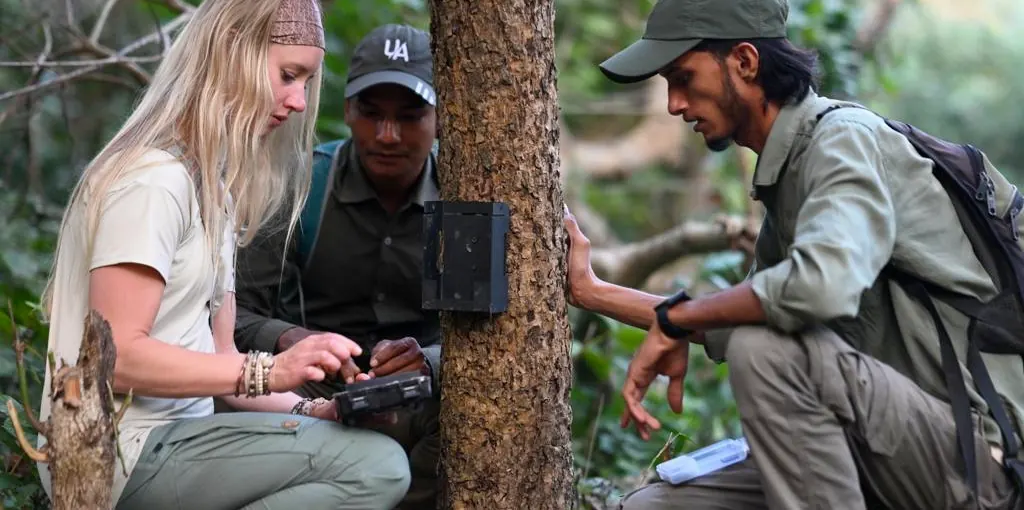
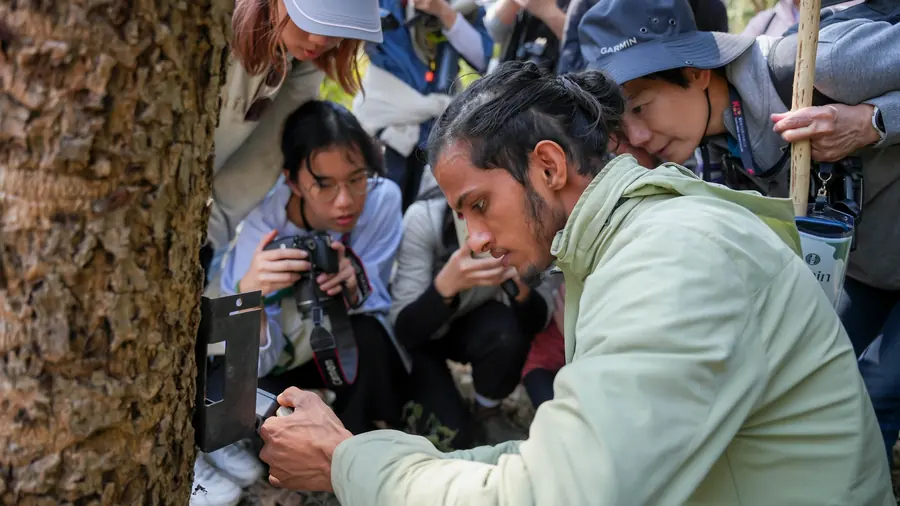
A Nepali field guide fitting a camera trap to a tree while students crouch round it with cameras
The Wild Systems Lab

Wire up a forest overnight, then work out whether you can trust what it tells you. Leave with a map of the landscape built from your own evidence, and the honesty to say where that evidence runs out.

Live work you can joinThe camera-trap and early-warning network that keeps both people and wildlife alive along the forest edge.
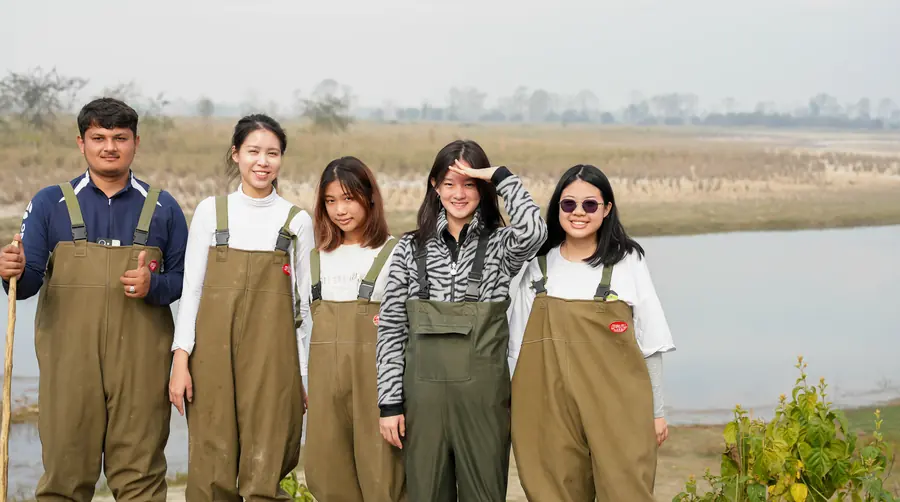
Five students in chest waders beside the river at Bardiya with a Nepali field guide
Climate Detectives

Measure a spring with a stopwatch. Ask a farmer what the winters used to be like. Set what he knows alongside a century of records, and see what the two together can tell you. Leave with a case file and a verdict you can defend.

Live work you can joinTurning elders’ flowering calendars and a century of records into a living map of where a landscape is beginning to fail.
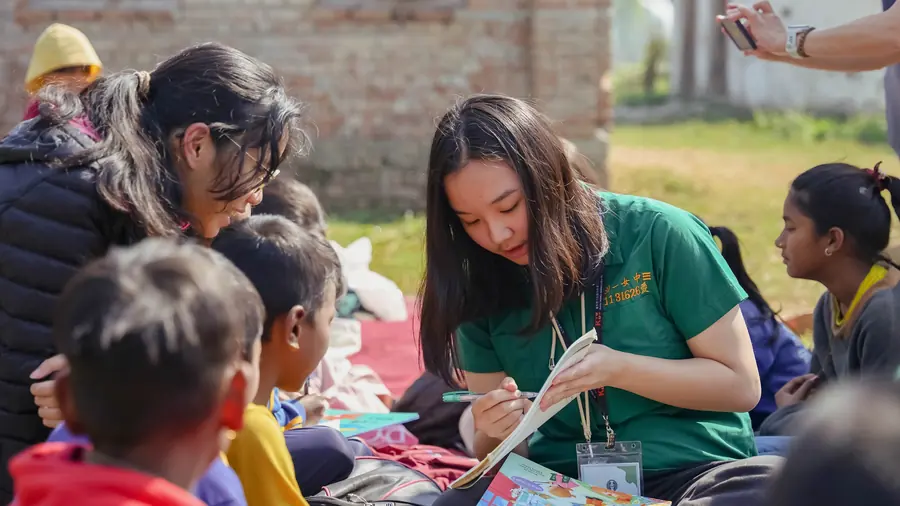
A student leading a reading session with village children, a Nepali teacher alongside
Leadership in the Wild

Learn to navigate, read risk and hold a team together, then take command, with the adults following and silent unless something is unsafe. Leave with a logbook and the experience of genuinely being in charge.

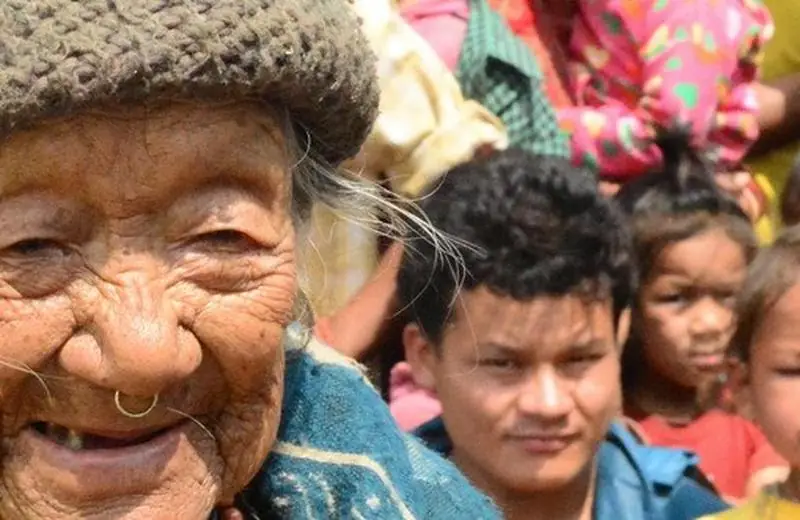
An elder and children of the community gathered together
Regenerative Entrepreneurship

Walk a landscape looking for the money leaking out of it, then design a business to plug the gap. Real numbers you defend to a panel of local people.

Live work you can joinDesigning and launching a village enterprise, from the Driftwood Workshop to new regenerative ventures, and defending the numbers to the people who will run it.
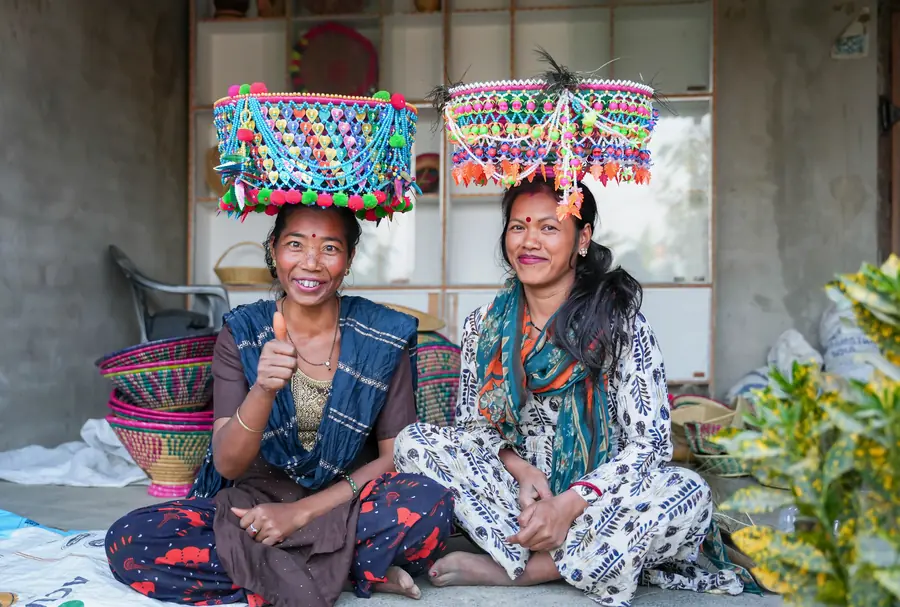
Two Tharu makers in beaded headdresses they have woven, among their baskets
The Makers’ Camp

Build with bamboo and mud alongside people who have done it their whole lives, and find out why it works. Add a signed piece to a structure that will outlast you.

Live work you can joinPrototyping tools and market-ready goods at the Community Centre for Conservation Technology, and building artificial nest cavities for hornbills.
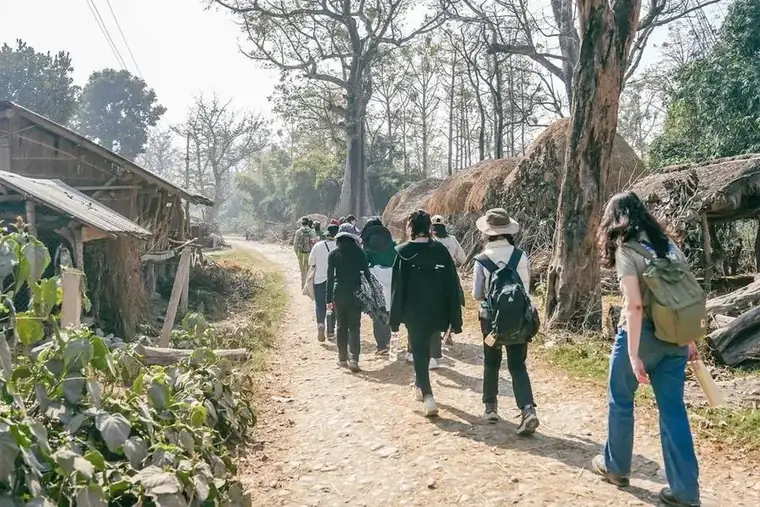
Students walking a track into a Tharu village past thatched longhouses
The Storytellers’ Camp

A hard deadline, and a premiere, screened to the people whose story it tells. Leave with a finished film, essay or photo essay with your name on it.

Live work you can joinSitting with families to document the true cost of living beside elephants and tigers — the data that policy keeps missing.
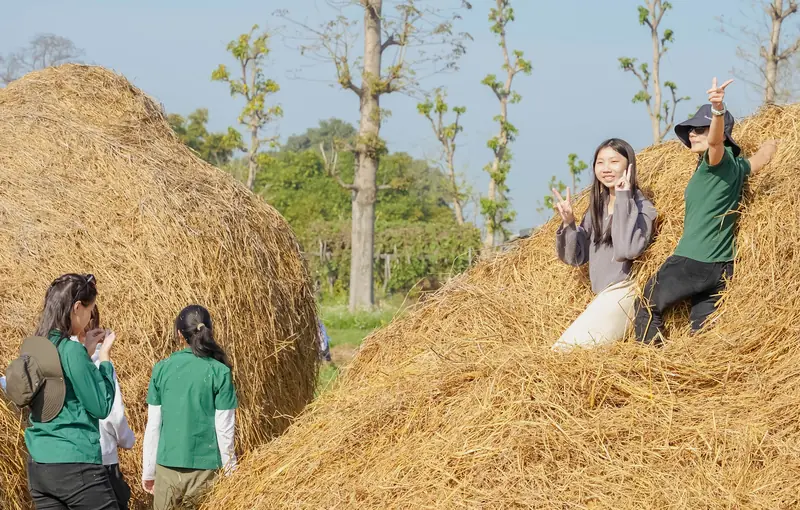
Students among the straw stacks on a farm after harvest
Regenerative Agriculture

Build a compost heap on the first morning and check it every day until it’s warm. Work a real farm alongside the family who runs it. Leave with a garden design for your own school, and an understanding of soil as something alive.

A student dancing in a borrowed Tharu skirt in a village courtyard at night
Built around you

Every programme bends to your curriculum and your questions. Tell us what your students need, and we’ll shape the days around it.

Groups of 10–30 Two teachers hosted free Two days to two weeks Year-round NPR 15,000 / student  ·  from USD 1,500 / student for a ten-day programme (min 10)

A day in Bardiya

Told by Maya, 16.

05:40
Woke up to peacocks.
We had to get up really early because the forest doesn't wait. I thought about how it is all just happening anyway whether we are there or not.
06:15
Breakfast on the riverbank. A big male tiger had crossed 20 minutes ago, just 200m away.
Tomorrow I want to get up 20 minutes sooner!
07:00
Walked the camera trap line with Bhadai. My trap had a civet at 2am! I had thought I might get a deer but hadn't really thought carefully about why.
I was wrong about my prediction. The animals mark your work. We can't predict what they will do but we can come up with clear hypotheses.
08:30
Splitting and soaking bamboo with Sita, who has built these walls for forty years. Mine collapsed. Hers didn't.
What works and what is good enough is decided by what survives the monsoon.
10:00
Worked on my project which is sitting with the Chaudhary family and making a ledger for the last year about what living beside elephants actually costs them (e.g. crops, fences).
Today I realised the compensation form asks the wrong things like what the elephant ate. Nobody asks about the stuff that really impacts them like the sleepless nights or their daughter not being able to walk to school alone.
12:30
Lunch, then an hour off. Slept under a tree.
14:00
Bishnu explained to us about the Badghar system, like how a water dispute is settled here without a court.
Found it a bit complicated. It seems like a more sophisticated thing than anything in my politics syllabus.
15:30
Visited the Driftwood Workshop. Asked what it costs to make one piece and how long it takes (4 days). I worked out what they earn per hour.
Four days to make one piece. I'd have guessed an hour. Thought about how tough it is to make a living here and why many young people have to leave.
17:00
Back to my ledger with Ram. He said I'd counted the fence repair once. His family rebuilds theirs twice a year. He was right. He was wrong about the goats.
Being corrected by someone your own age is a cool way to learn stuff! He knew it was wrong because his family lives it.
19:00
Dinner at camp. Then the fire. Someone asked about the compensation scheme and no one in the circle knew so I shared what I found out today.
It felt great to be able to share something I had found out for myself. The best questions are the ones the adults can't answer either!
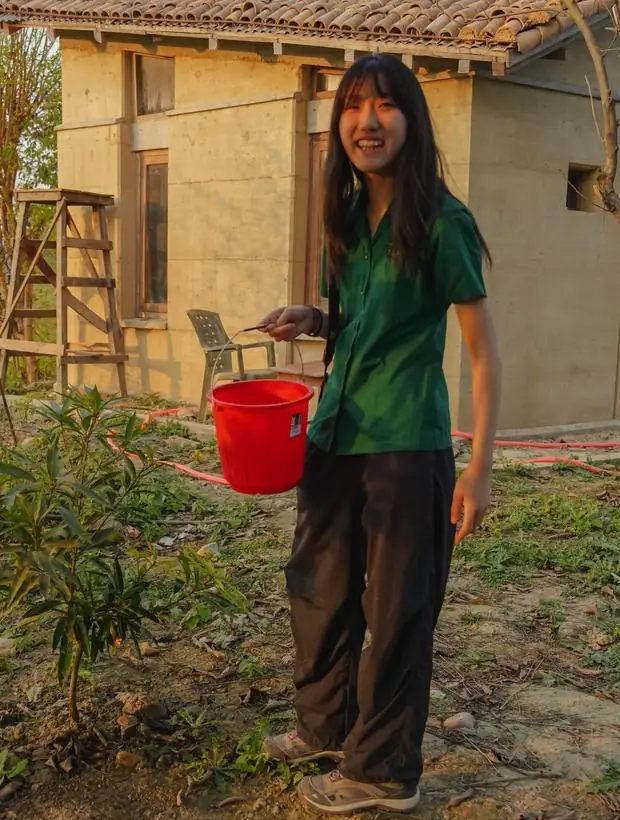
A student carrying a bucket outside a mud-walled building in Bardiya

Where we teach

Four grounds, one school.

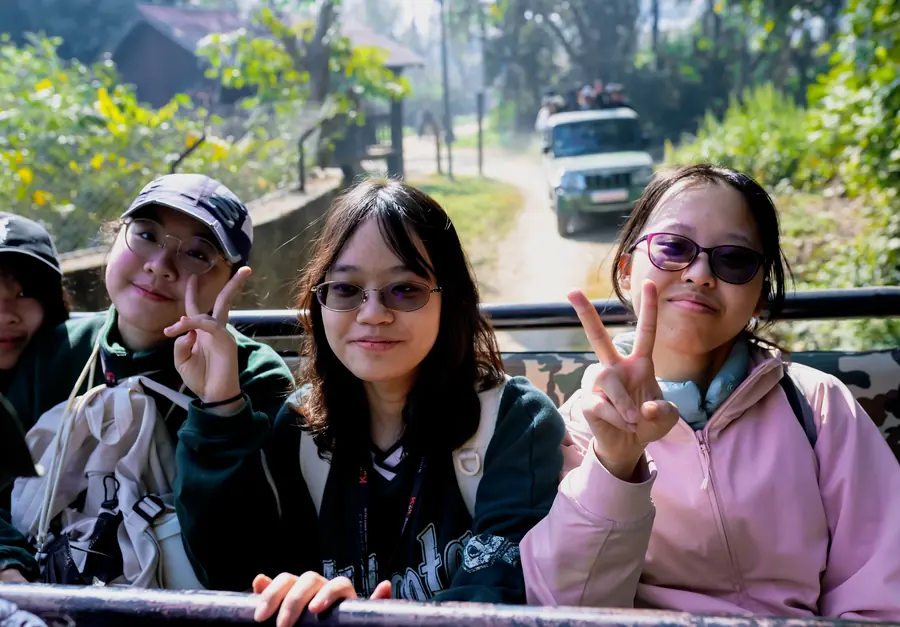
Students in an open jeep on the forest track at Bardiya
Dalla Village · Bardiya · Western Terai

Bardiya

Sal forest and elephant grass, the Karnali running out of the mountains, tigers on the same paths the Tharu have farmed for centuries. A proto-world: almost every argument of this century, present in miniature, at a scale you can walk across in a morning. Students stay at Angna Ghar, a community-run Tharu longhouse.

TIME World's Greatest Places 2024 · Burhan Wilderness Camps
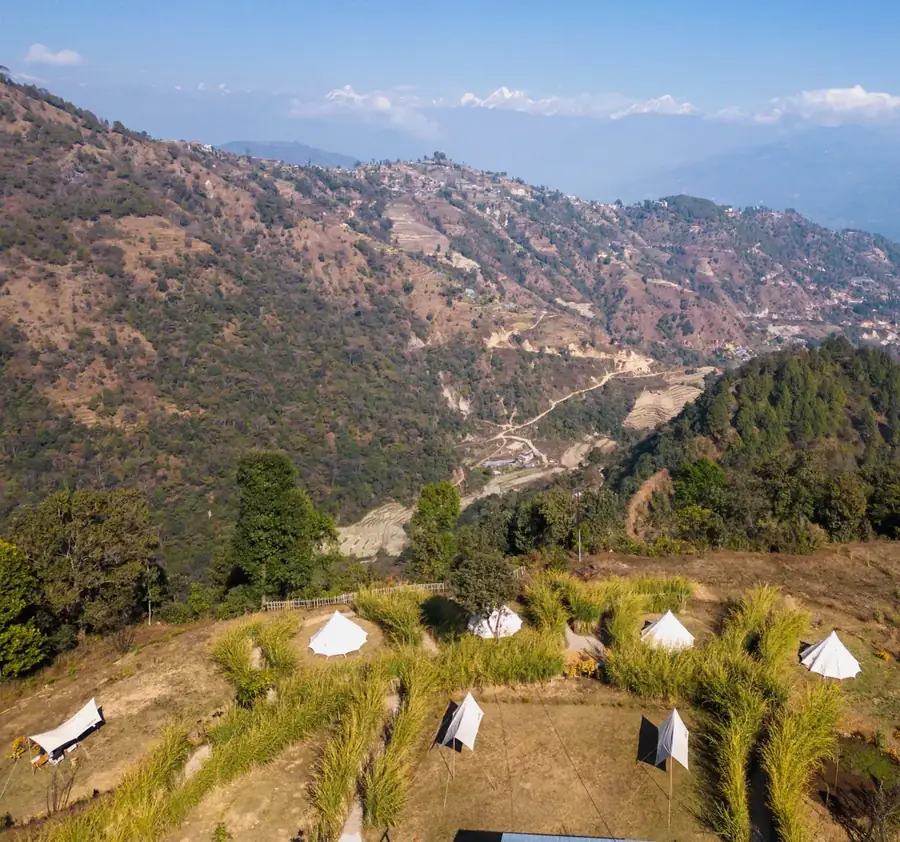
Bell tents on a terraced ridge at Nagarkot with the Himalaya on the horizon
Nagarkot · Bhaktapur · Valley Rim

Nagarkot

Ninety minutes from the capital and a world away. Terraced hills, pine forest, and pangolin burrows in the scrub behind the houses, farmed by Tamang families whose springs run lower each year. Students stay under canvas at Noumenal Camps, with the Himalaya across the valley at dawn.

Two-day programmes · year-round
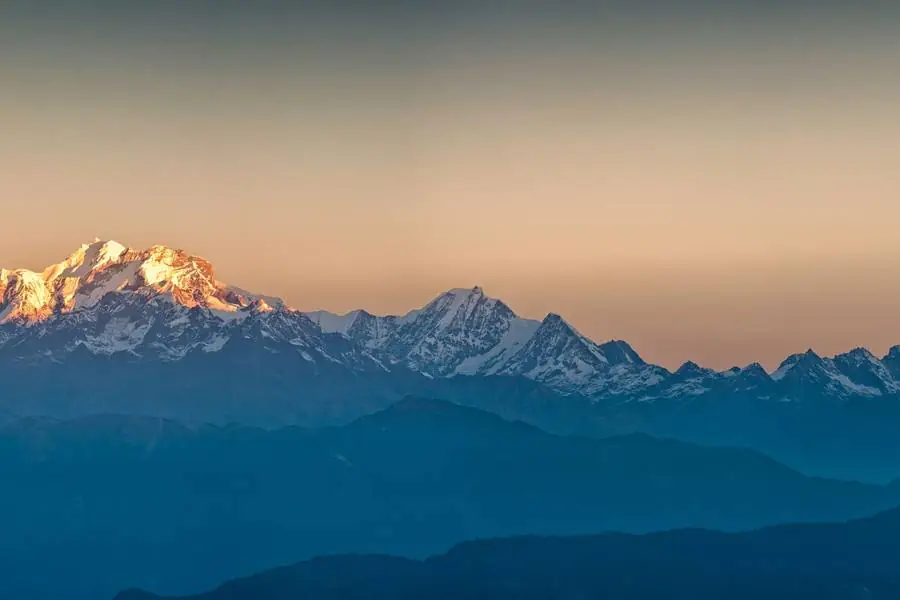
Snow peaks above the ridges near Pokhara at dawn
Deumadi Mountain · Kaski · Pokhara

Deumadi

Ridge and forest above the lakes, the Annapurnas standing across the valley. Our third site, still taking shape — it looks upward, to mountain ecology and the communities who live where the road runs out, where decisions made in Kathmandu arrive last and matter most.

New site · taking shape
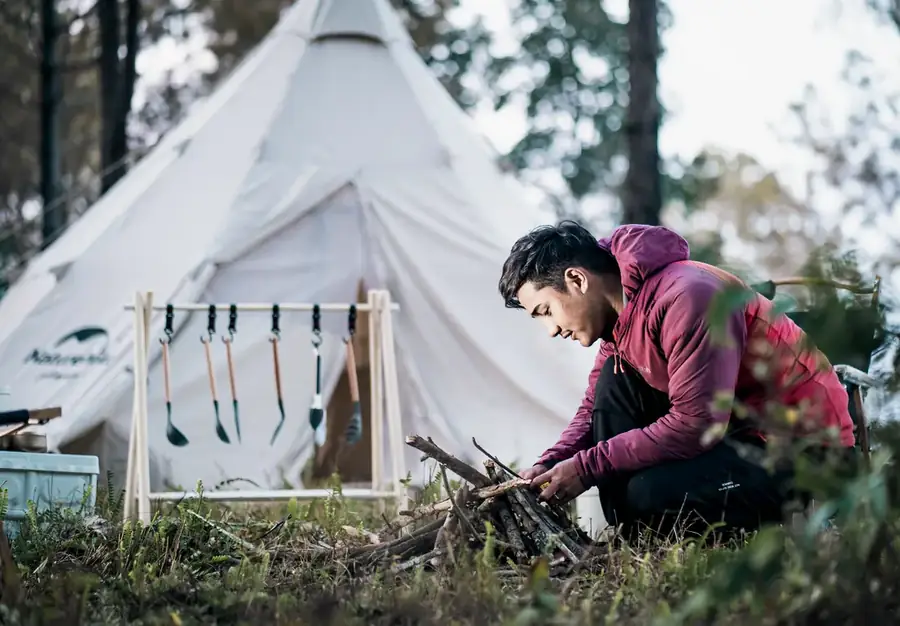
A guide laying a fire beside a bell tent pitched in pine forest
Anywhere the question lives

Mobile Camp

Tents and kit that travel anywhere. When a question belongs somewhere else — a river under dispute, a village facing a road, a landscape nobody has taught from before — we take the school to it, and learn alongside the people who live there.

Goes to the ground

Why we teach

Why we teach.

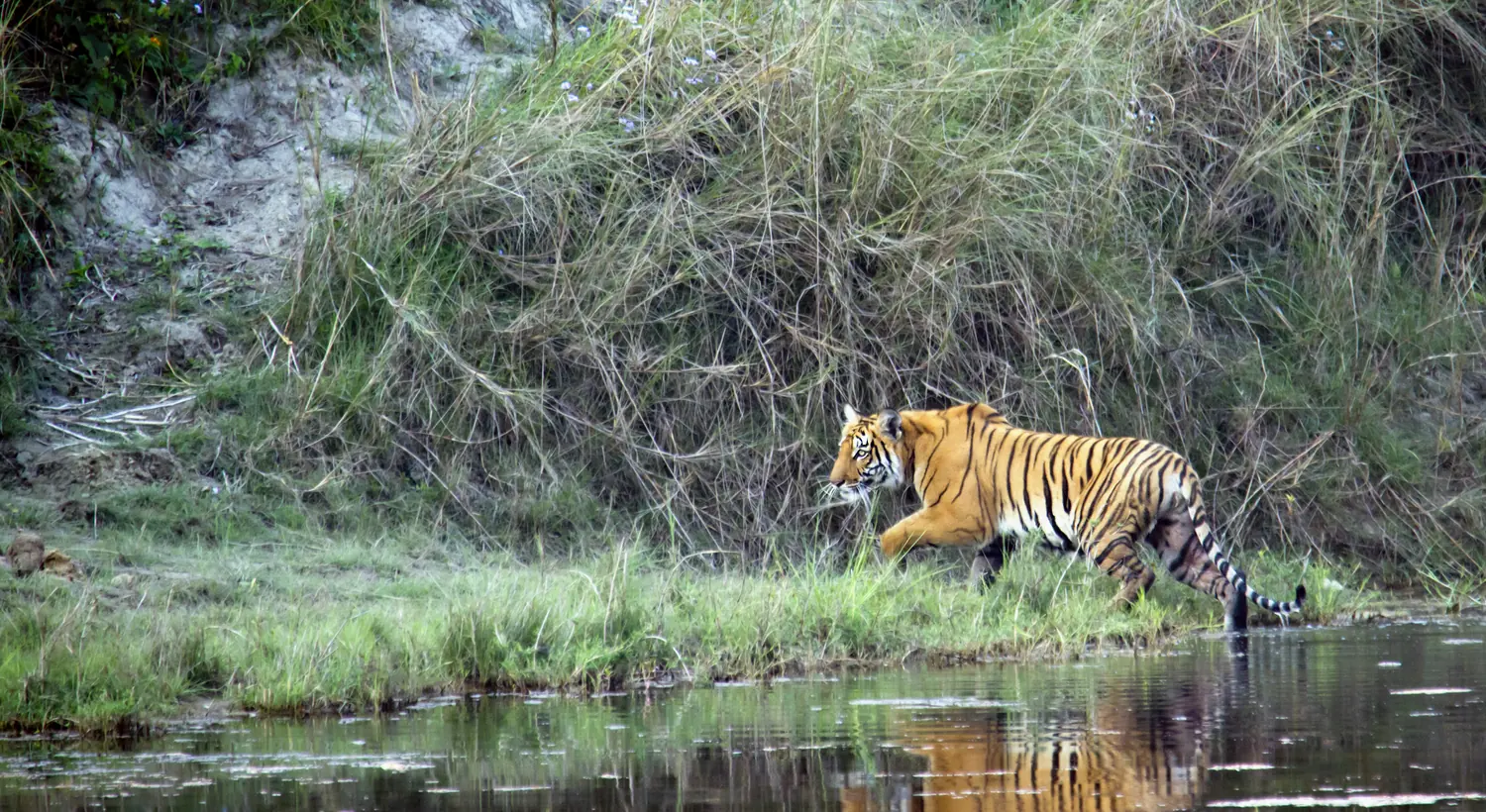
A Bengal tiger walking a riverbank in the Terai
The animal everyone came to save — and the easiest part of the problem to see

Because the problem is never where we are looking

The pangolin is not disappearing because of the illegal trade alone. It is disappearing in the margin of a farmer's field, where a road has been cut and the market has crept a little closer. None of that announces itself as a threat. It announces itself as development: people, reasonably, wanting a better life.

Trafficking is easy to name, easy to fund, easy to photograph. A field expanding by a metre a year is not.

And when we fix on one thing we make the rest worse. Bardiya's tigers were brought back from almost nothing, a triumph paid for by families who lost crops, livestock and sometimes more, and who were never counted in the arithmetic of it.

We were labelled poachers for living as we always had. Our knowledge of the forest was erased, yet we're now asked to protect it.Hemanta Tharu
We're told to coexist with wildlife, but coexistence requires support. We feel abandoned.Sushila Mahatara, naturalist

A species, a farm, a forest, a household: none of them is a separate problem. What we chase at the level of one is only the symptom.

Because we made a profession of the problem instead of an end to it

Looking after the land used to be part of making a living. The fisher left enough fish to breed. The field was laid fallow so the soil could recover. Nobody was paid for it; it was how you kept a place worth living in.

Now it is a profession. A species is declared threatened, money is released, and that money pays for staff, offices and projects that exist only while the species is still in trouble. Nobody chose this, and nobody is rewarded for finishing. It is like a doctor paid for every appointment but nothing for a cure.

So we count the surveys, the reports, the conferences. All real work, by committed people — and meanwhile the causes the community named decades ago go unaddressed. We are milking hard into a pail full of holes.

They build fences, take photos, then leave. We're their success stories until the cameras are gone.Raju Tharu, farmer at Kailashi

The people who decide whether anything survives are rarely the ones who get to say what worked, and credit is not just praise: it is next year's funding. The prize is not a bigger profession. It is the day the farmer, the engineer, the planner and the shopkeeper all do this work as a matter of course, and the profession, having taught them, is no longer needed.

Because we teach children to close questions, not open them

Why does the same mistake repeat, generation after generation? Because we keep producing the same kind of person. School into degree into master's into doctorate rewards mastering a framework over knowing a place, and spends far more of a young life at a laptop than out among people. We turn out specialists trained with enormous care to model a problem they have never once smelt.

We have taught children that learning means closing a question: a debt settled by the right answer. It is efficient. It is also, very often, forgetting dressed up as knowing.
Education is not the delivery of answers. It is waking a hunger to understand, and the capacity to stand inside a hard problem without needing it to be simpler than it is.

What Himalaya Living School is not.

Service-learning.

There is no server and no served. A volunteer arrives to help, and leaves. The criticism of that model is well earned — the school roof replaced by teenagers every year, the harm done to children by a rotation of affectionate visitors. Here, the problems students work on are unresolved for everyone in the room. Students are participants, not saviours.

A tour.

The community are not hosts, guides, entertainment or exhibits. They are the faculty: named, contracted and paid to teach what they know. The people who live with a problem understand it best, so they teach.

A science expedition.

We don’t observe the field, we live in it. Students weave, build, farm and cook alongside the people who have always called this place home, learning with their hands as well as through a lens. They gather evidence and they take it seriously — but the point of the data is the judgement it forces, not the dataset.

A trip.

A trip ends when you leave. Here, the work carries on without you, and whether it holds is the mark you get. If a system doesn't survive the monsoon, or an enterprise has fizzled out after 18 months, we learn from that.

A nature camp.

Life was never divided into separate boxes, and neither should learning be. Wildlife is one thread among many. Ecology sits alongside agriculture, water, governance, health, enterprise and inherited knowledge as equal subjects. At the centre is community: the people who hold every thread in their hands.

A campus.

We do have long-established learning sites across Nepal, but Himalaya Living School happens in the community and landscape, not the buildings.

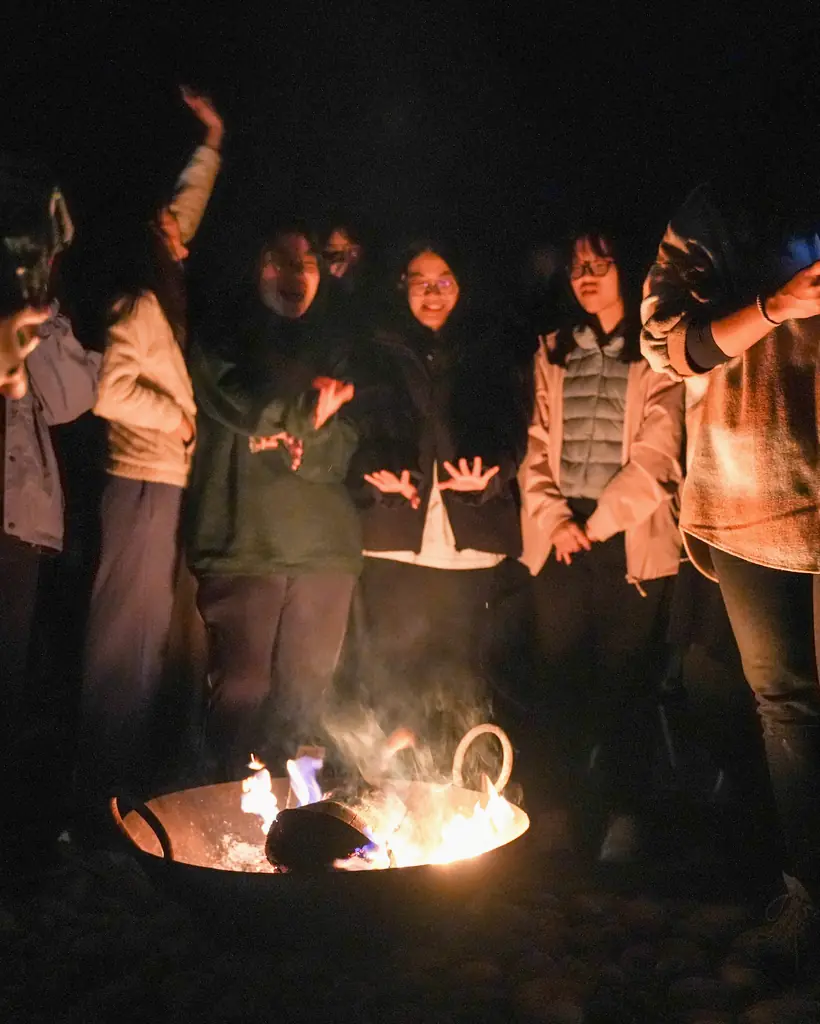
Students warming their hands around a fire bowl at night in Bardiya

Voices from the campfire

What some of our students and teachers have taken home from their time here.

“I came hoping to learn about pangolin conservation. What I left with was a reflection on how ignorant I am.”

Albert Hsu · Student, Taiwan

“We saw their resilience. They don't need saving; they need allies.”

Michelle Li · Class 12

“The best way to find solutions is to work together instead of doing what is best for us as individuals.”

Student · École Jeannine Manuel, France

“They respected our students as partners on this journey.”

Bart Dankaerts · CAS and Service Learning Coordinator, American School of the Hague

“They realised there was no quick fix. Frustration and a 'fail forward' approach made them re-evaluate the dynamics at play.”

Rebecca Greenway · Educator, École Jeannine Manuel, France

“We don't teach solutions. We create spaces where students and communities unlearn together.”

Manoj Gautam · Founder

Our commitment to every school.

We are not a competitor to your school. We are an extension of it: the part that happens where the stakes are real. A fourteen-year-old can be handed genuine responsibility on a monsoon trail only because of the safety groundwork behind it.

A student and two Nepali field staff fitting a camera trap to a tree in the forest at Bardiya
Never fewer adults than the work needs

Keeping your students safe

  • Facilitator-to-student ratio of at least 1:8, tighter on water, in forest and after dark.
  • Every adult in contact with students holds a current Nepal Police Clearance Certificate, two written references, a documented interview, and an annual safeguarding briefing. We have a policy of never leaving a student alone with a single adult.
  • A named safeguarding lead, a deputy on site, and waking supervision overnight.
  • A written risk assessment for every activity.
  • A critical incident plan naming who calls you, who calls the parents, and in what order.
  • Public liability insurance, figure disclosed.
  • Treated drinking water and inspected kitchens.
  • Vehicle and driver standards, including limits on driving hours.
  • Dietary and allergy requirements met without exception.
  • A living set of standard operating procedures, reviewed after every programme.

First aid and evacuation

  • At least one Wilderness First Responder on site at all times, and all facilitators holding current Wilderness First Aid as a minimum, certified by an internationally recognised provider and renewed every two years.
  • A comprehensive medical kit at camp and a field kit on every activity.
  • Medical and allergy information collected before arrival, held by a named staff member, and known to every facilitator on the programme.
  • Prescription medication stored securely and administered by a named member of staff.
  • Evacuation routes and timings from each site stated in hours, with a vehicle on standby throughout and helicopter arrangements under a named authoriser.

Working with you

  • We provide a written report after every visit: what your students did, what they produced, what worked and what did not.
  • Your teachers are participants, not chaperones; they join in the learning, and we brief them fully beforehand so they arrive knowing the place, the people and the questions.
  • We map to your curriculum, supporting frameworks including CAS and IB — we show you where and how.
  • We can help you prepare students and parents with pre-departure materials and a session for families.
  • The relationship does not end when your students go home. We offer structured follow-up, continued contact with the community, and support for what they carry back.
  • We tell you what your money does here: what is paid to community faculty, what stays in the local economy, and what your school's visit funded.
  • We will give you an honest answer on flying. Most of what we do involves no flights; our largest cohort is Nepali students on programmes near Kathmandu. For international visits, we would rather host one longer stay than several short ones.

Our commitment to every student.
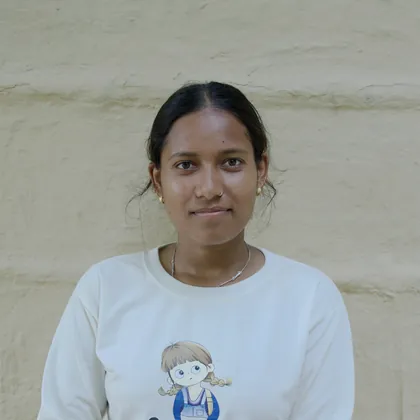
You will be welcomed in, not shown around. Into the community, its households and its way of doing things, as a participant, not a visitor. An observer watches and leaves. A participant is answerable to the people around them.

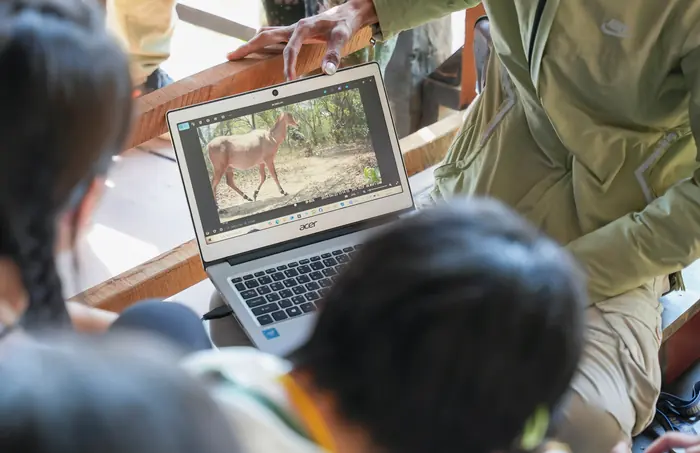
Students and a guide reviewing camera-trap images of a nilgai on a laptop
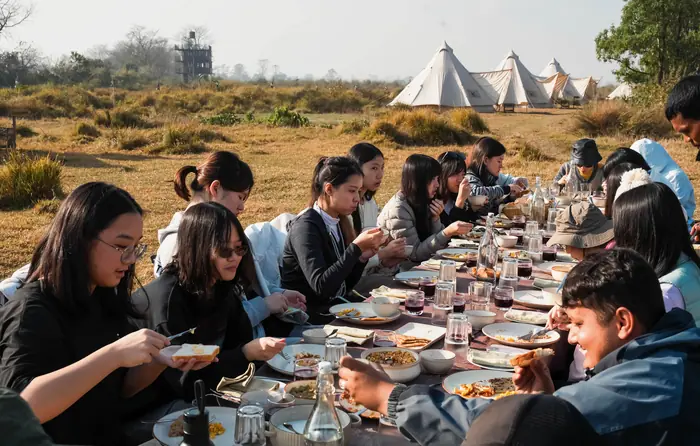
Students eating breakfast at a long table in front of the tents
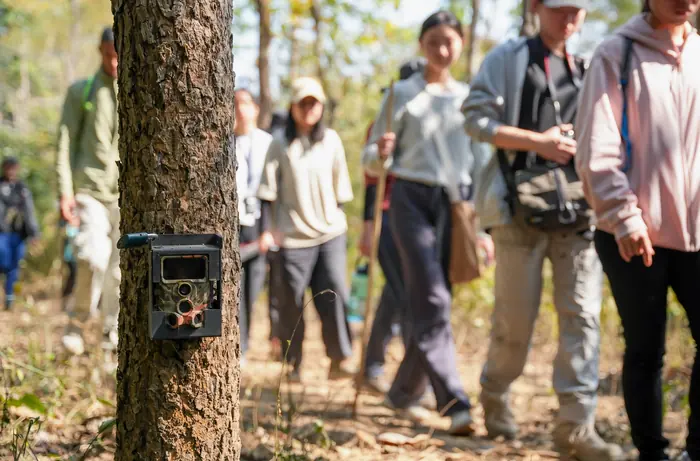
A camera trap strapped to a sal trunk as students walk the line past it
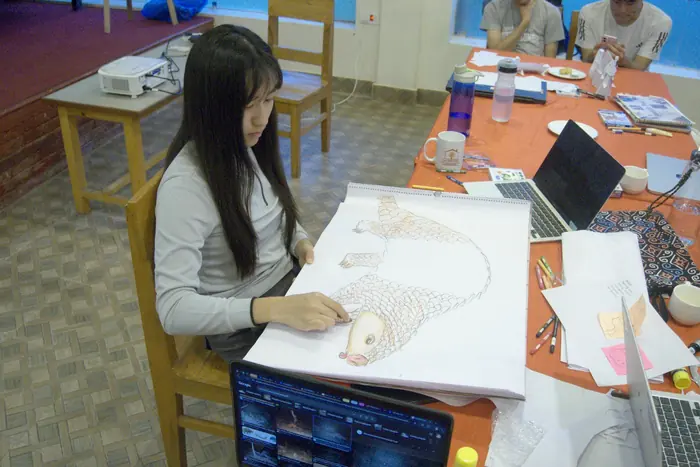
A student drawing a pangolin beside a laptop of camera-trap images at the CCCT
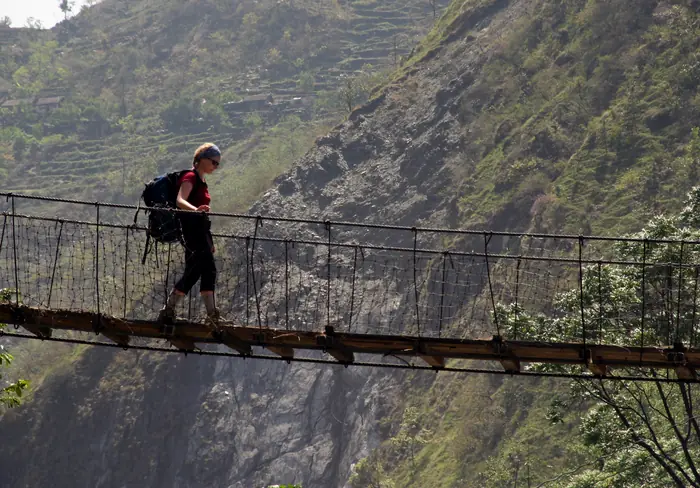
Crossing a suspension bridge high above a river gorge

You will be paired with a buddy.

A local student your own age, working alongside you. The start of a conversation that can last a lifetime.

You will design a project and see it through.

Not an exercise with a marked answer. Work on real ground that might fail publicly, but that's okay.

You will be trained on real equipment.
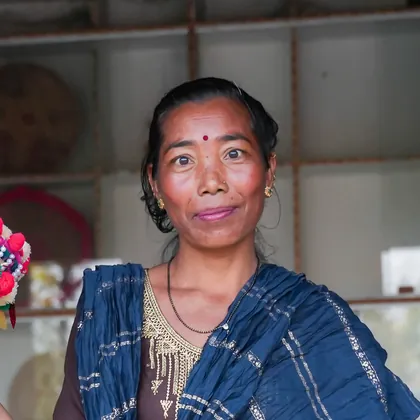
Camera traps, drone surveillance, and the field methods practitioners actually use here.
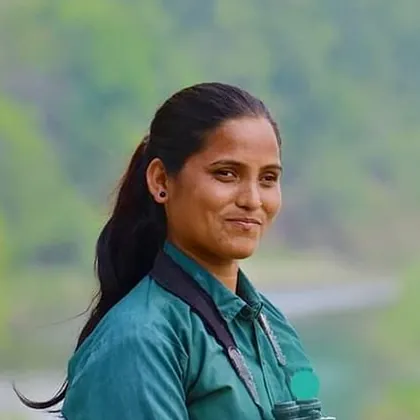
You will learn from people at the top of their field.

A community faculty who have lived this landscape for generations, and leading experts in wildlife, ecology and community development.

You will find your voice and use it.

In conversations around the fire, where you'll be taken seriously.

You will come to understand coexistence by living it.

Not by being told about it.

You will eat real food grown from the earth, breathe clean air, and sleep under real dark.

There will always be someone to talk to.

Day or night, a member of staff you already know, whose job is to make sure you're feeling safe and happy.

Our team

The people who hold it together.

Operations
Manoj GautamManoj GautamFounder & Director
Dakshina KhadkaDakshina KhadkaOperations Lead
AnmolSchool Liaison
Rojit KarkiRojit Karki
Care
Niraj GautamNiraj GautamHead of Student Experience
Sarah VallentineSarah VallentineAdvisor & Safeguarding Lead
Community Faculty
Bandana TharuBandana Tharu
Biru ChaudharyBiru Chaudhary
Dinesh AcharyaDinesh Acharya
Gopal SunarGopal Sunar
Hemanta AcharyaHemanta AcharyaChairman, Buffer Zone Management Committee
Harkali TharuniHarkali Tharuni
Manju MahataraManju Mahatara
NanaNana
Narayan ChaudharyNarayan Chaudhary
Nisha TharuNisha Tharu
Sonia TharuSonia Tharu
Sushila MahataraSushila Mahatara
Education
Laxmi Dhakal

Our partners & network

We keep good company.

Partner schools
American School of DohaQatar
American School of the HagueNetherlands
Little British School of LilleFrance
École Jeannine ManuelFrance
Taipei First Girls' High SchoolTaiwan
Kopila Valley SchoolSurkhet, Nepal
On the ground
BCRCFBurhan Community Regeneration & Conservation Foundation
Burhan Wilderness CampsBardiya
Angna GharCommunity Tharu longhouse, Bardiya
Noumenal CampsNagarkot
The Lapsi Tree ResortPartner stay
Deumadi CottageDeumadi, Pokhara
Community Centre for Conservation TechnologyCCCT
Bardiya National Park Buffer Zone Management CommitteeBardiya
Elephant Protection GroupHatti Mero Sathi · Madhuwan, Bardiya
The Driftwood WorkshopCommunity enterprise, Bardiya
Community Based Anti-Poaching UnitCBAPU · with Burhan Wilderness Camps
Rapid Response TeamBardiya · with Burhan Wilderness Camps

Join us.

The classroom is not the only place a young person learns. It is just the one we built.

Come and see the other one, where learning meets the ground.

info@himalayalivingschool.org +977 9841 496822 Bardiya · Nagarkot · Deumadi, Nepal